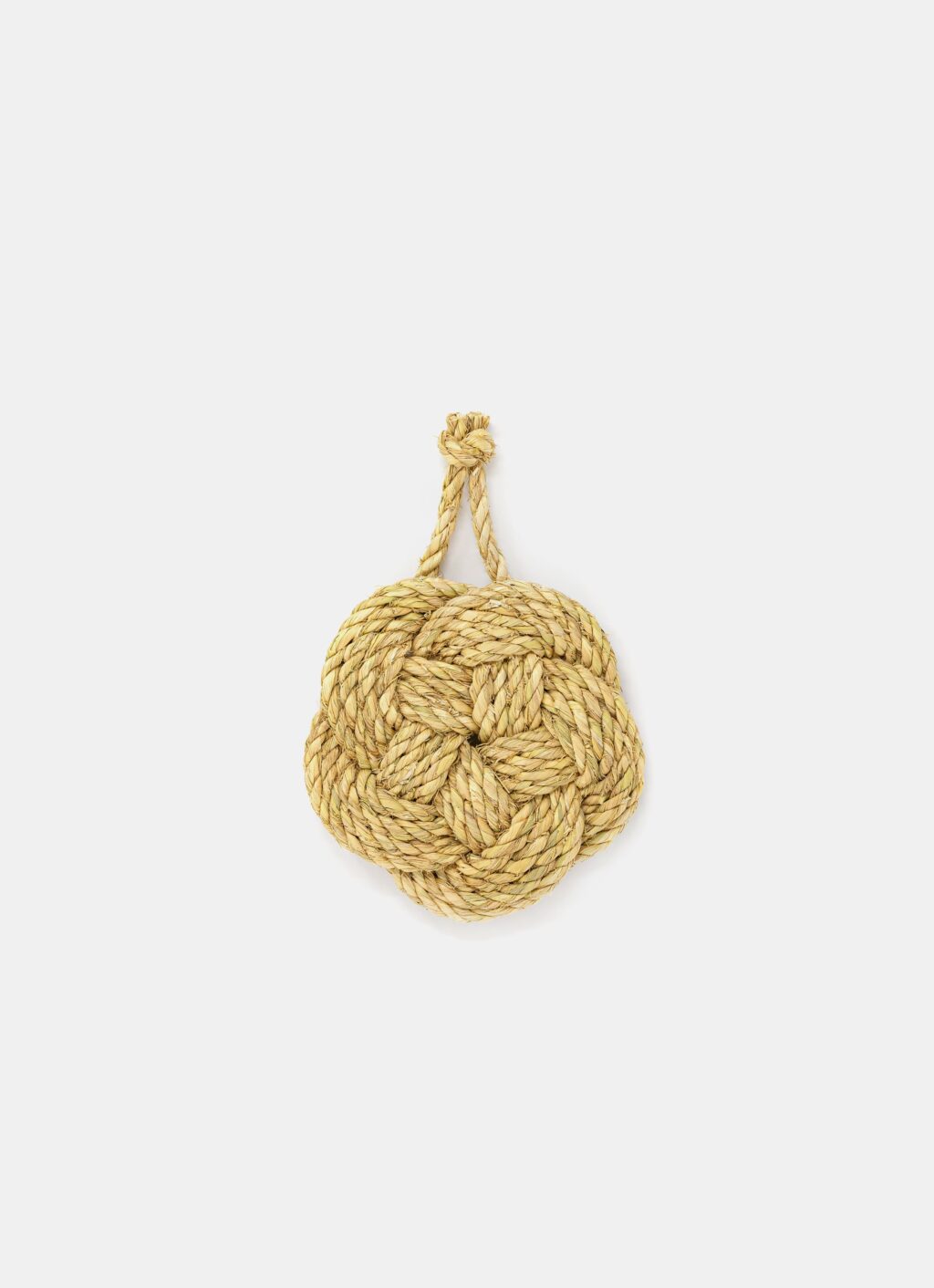
TAKUBO STRAW
A CRAFT AS OLD AS JAPAN ITSELF
Warazaiku, the art of weaving rice straw by hand, is one of Japan’s oldest crafts, mentioned as far back as the Kojiki, the country’s foundational chronicle compiled in 712. For centuries it grew alongside rice farming and Shinto belief, practiced by farmers who turned the straw left over from each harvest into sandals, storage baskets, ropes, and ritual ornaments. Woven by hand, coil by coil, each piece was understood to carry a quiet prayer for good fortune, worked into the material by the maker as they twisted it.
ROOTED IN TAKACHIHO
Takubo is based in Hinokage-cho, a mountain village in the Takachiho region of Miyazaki Prefecture on the island of Kyushu, a landscape held sacred in Japanese mythology. Local legend tells of Ninigi-no-Mikoto, grandson of the sun goddess Amaterasu, descending from the heavens here carrying a sheaf of rice, a blessing meant to ensure the land would always be abundant. That old promise still shapes the region today: Takachiho’s terraced rice fields, carved into steep mountainsides over generations, remain some of the most striking in the country and are recognized internationally for their agricultural heritage.
FROM FARMERS’ SIDE TRADE TO LIVING CRAFT
Takubo’s own story began in 1957, when local farmers wove shimenawa ropes and straw ornaments during the quiet months between harvests, a modest source of extra income built on generations of shared knowledge. What started as seasonal work grew, over decades, into a dedicated workshop, becoming a full-time operation in 2016 and formally incorporating as Takubo Co., Ltd. in 2024. In 2022, the craft was officially recognized as a traditional handicraft of Miyazaki Prefecture, a rare distinction for a practice so many feared was disappearing.
That fear was not unfounded. Modern, machine-driven rice harvesting cuts the stalks far too short for weaving, which has left this kind of straw craft increasingly hard to sustain. Today, Takubo is led by Yoichiro Kai, a third-generation craftsman who has spent years working against that trend, growing rice by hand specifically to be harvested long for weaving rather than for grain alone. Roughly three quarters of every year go into cultivating and preparing the straw itself, a slow, seasonal rhythm that often means working around an unpredictable mountain climate long before a single piece is woven.
TWO KINDS OF STRAW, ONE TECHNIQUE
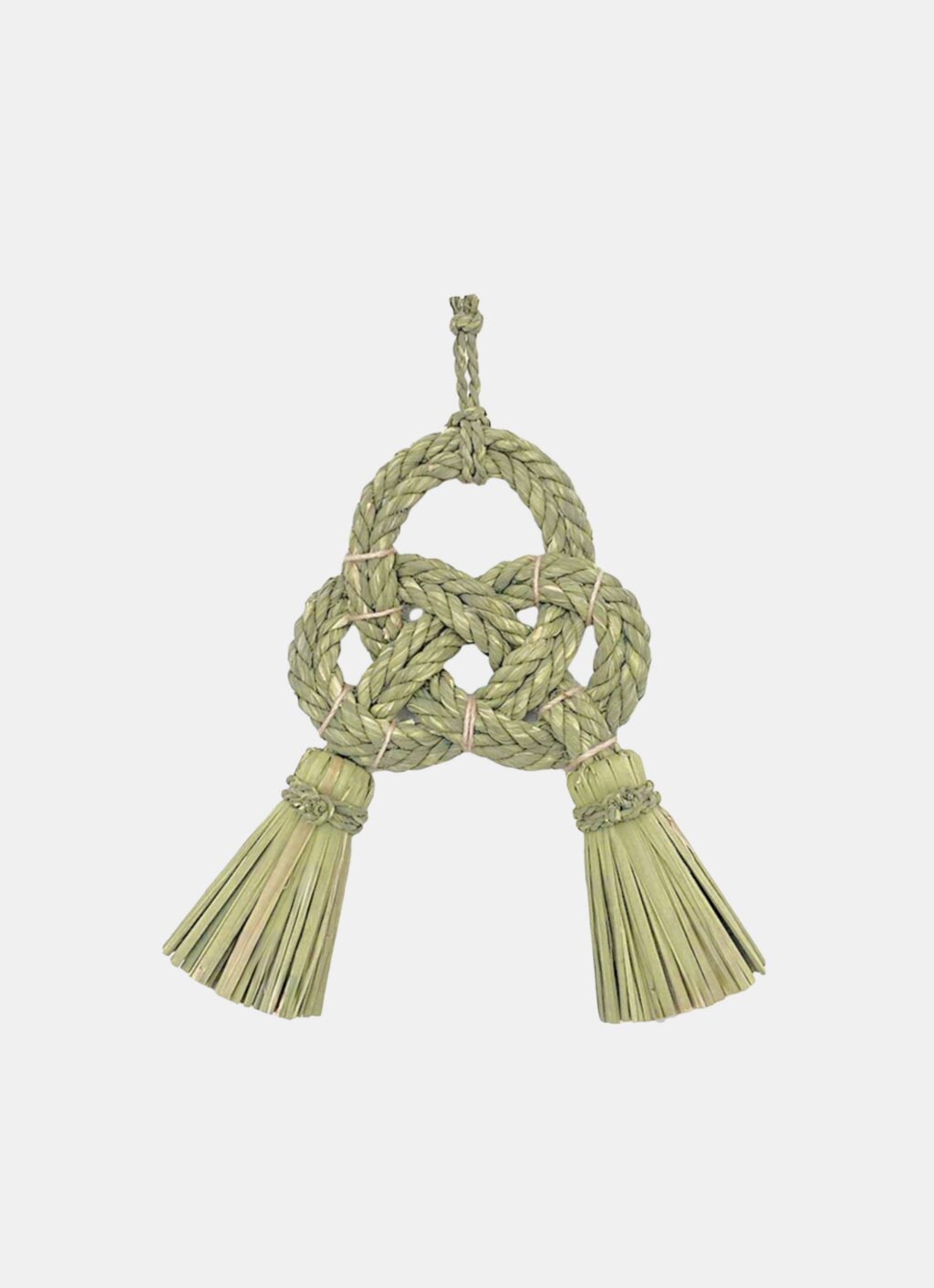
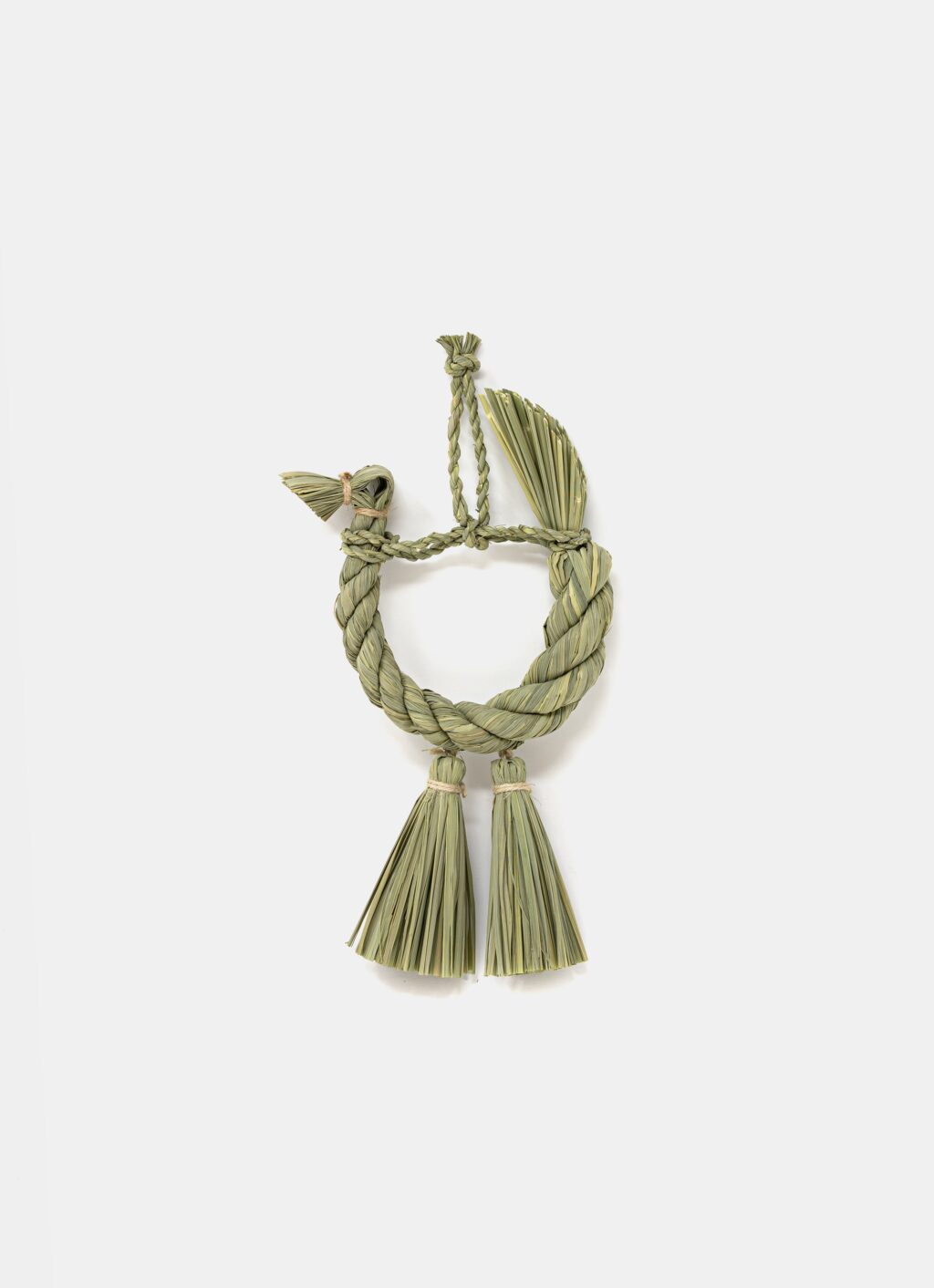
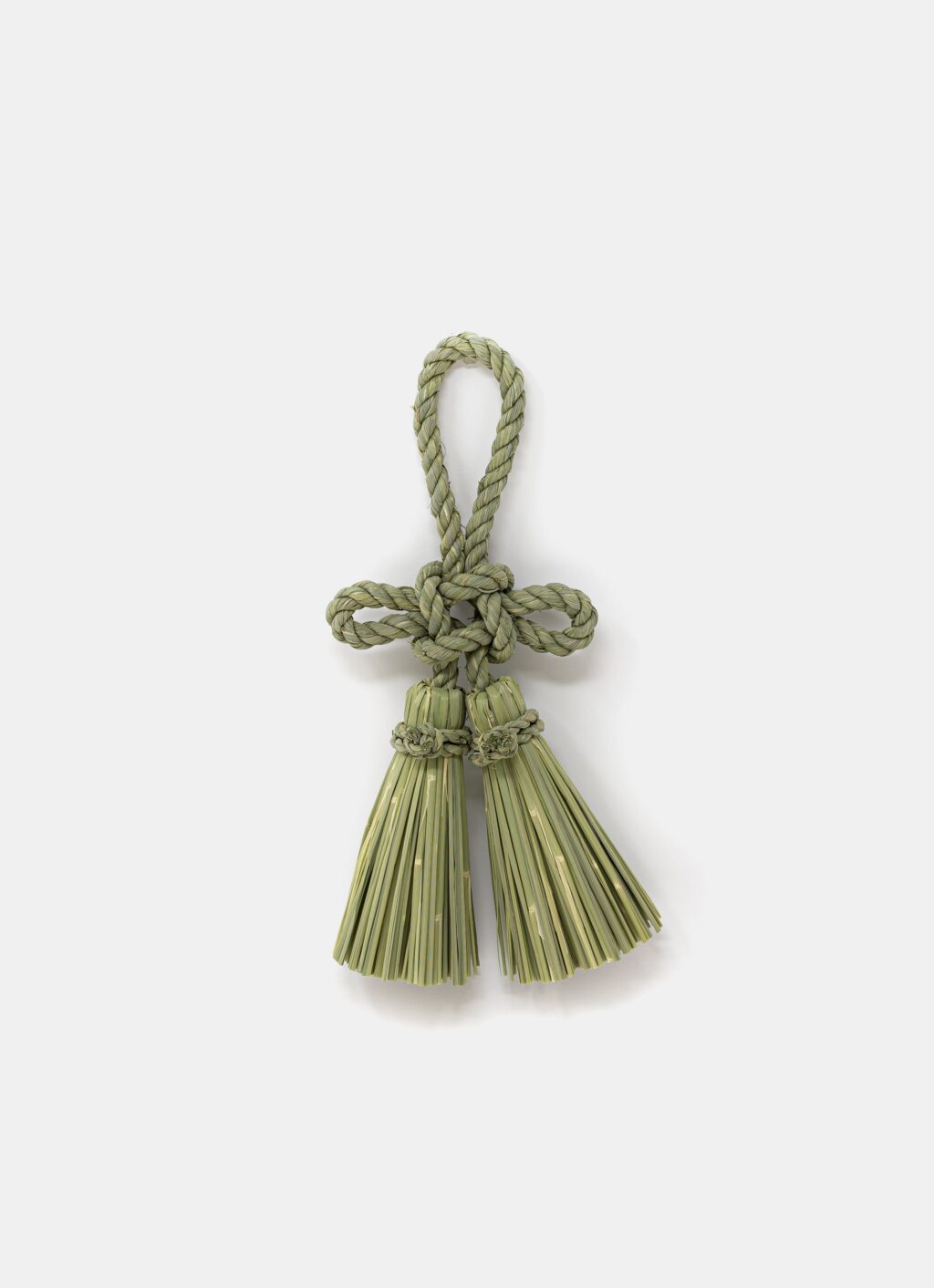
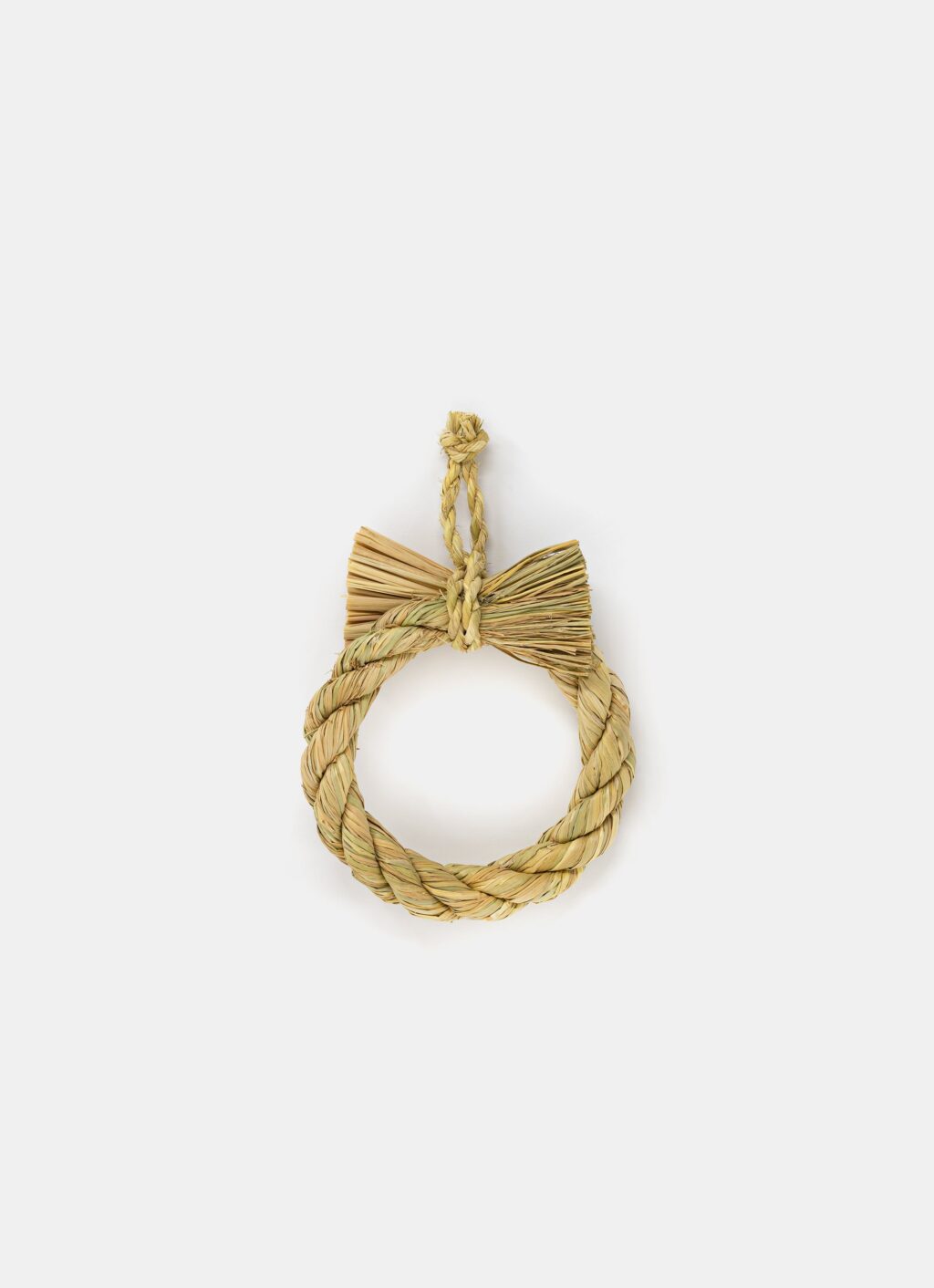
Every Takubo piece begins with nawanai, the fundamental technique of rolling rice straw between the palms until it twists into a single, even cord, entirely by hand and without machinery. From there, cords are shaped, bent, and bound into finished forms, whether a hanging ornament, a wreath, or a trivet. The workshop grows and prepares two varieties of straw for this work: inawara, harvested after the grain has ripened and valued for its strength and texture, and aowara, cut while still young and green, prized for its brighter color and faint natural fragrance. Aowara in particular continues to change after weaving, mellowing gradually from green to a warm golden beige as it meets light and air over time.
MORE THAN AN OBJECT
Yoichiro Kai and his team don’t separate the craft from what it’s for. Growing their own straw, training newcomers who are drawn to a slower pace of life, and weaving every piece by hand are all part of the same effort: keeping a centuries-old technique in daily use, giving the region around Hinokage-cho a reason for young people to stay, and sending out objects meant to feel like they were made with someone specific in mind.